
Limber PinePinus flexilisHeight: 30' average mature height Zones: 4-8 Find my zone Aspect: partial shade to full sun Watering: needs occasional summer irrigation, about one deep watering cycle per month once established Maximum Water: tolerates occasional winter flooding but needs drier soil in the summer Habit: single stem or trunk Foliage: evergreen Native To: AZ, CA, CO, ID, MT, ND, NE, NM, NV, OR, SD, UT, WY
This plant can't be shipped to California, Hawaii, Montana
Size Availability
14 to 18 inches tall - 7 years old - $17.50 each
Ships free with orders of $75!*
Packed with a bagged root ball.
3 to 4 feet tall - lightly branched - $45.00 each
The Limber Pine is an extremely tough species found through the Rocky Mountains from New Mexico to Canada where it can survive on mountain peaks at higher elevations than other tree species can grow. It is similar to the closely related Whitebark Pine (
Pinus albicaulis
) and also has a similar habit to the Bristlecone Pines which are more distantly related. The Limber Pine is an excellent choice for bonsai because of its short needles, thick trunk, and dense branches. It also develops far more branches near the base of the tree than most other conifer species.
Trees develop thick foliage and an upright habit when grown under normal low elevation conditions, but at high elevations Limber Pines develop twisted, gnarled forms from extreme wind and heavy snow loads. Each tree is very unique in its appearance and often develops a trunk several feet in diameter even though the tree only reaches five or six feet tall. Bonsai enthusiasts often recreate this contorted and flattened habit with this species but it can also be done on a larger scale in the landscape with regular and careful pruning.
Like other high elevation pines, the Limber Pine prefers well drained soil and full sun, although some shade is okay. If you don't have well drained soil try creating a soil mound four to five feet wide and three feet tall and plant the tree on top of the mound as this will provide the roots with extra drainage.
Bristlecone Pines
There are three true Bristlecone Pine species, the Great Basin Bristlecone, Rocky Mountain Bristlecone, and Foxtail pines as well as two other more distantly related species: Whitebark and Limber Pines. All five of these species are typically found at extreme elevations where they are tough, long-lived trees that grow slowly into impressive gnarled specimens in locations where no other trees can survive. These trees can survive for thousands of years under harsh mountaintop conditions and all five species have at least one individual that is estimated to be over 3,000 years old. However, despite their longevity under such harsh conditions, these types of trees can be difficult to grow in lowland conditions where high heat and humidity, as well as nutrient-rich and moist soils, are unfamiliar and unwelcome.
The only species that seems easy to grow in landscapes is the
Limber Pine
as it seems to be much more adaptive to heat and soils that aren't made entirely of deep gravel and boulders. When growing the other species in containers (such as for bonsai), we recommend growing them in a mixture that is primarily made up of volcanic pumice or perlite. This material is free draining but holds onto more moisture than pure gravel. However, the trees will still need to be watered somewhat frequently to prevent the roots from drying out entirely since these trees are used to having their roots 30-100 feet deep.

A twisted and flattened Limber Pine growing on a rocky ridge with no soil
Source: Commons

A large Limber Pine with multiple trunks
Source: Commons

The trunk develops a gnarled appearance as trees age
Source: Commons

Limber Pines growing on a high elevation ridge where no other tree species can survive
Source: Commons

Limber Pines growing on the edge of a cliff
Source: Commons

These Limber Pines are the only plant able to grow in this desolate soil
Source: Commons

Limber Pines growing just above the tree line of other conifer species
Source: Commons

Close up of the short needles
Source: Commons

Pinus flexilis - Limber Pine in a two gallon container

A Limber Pine in a more protected location where it is allowed to grow upright
Source: Commons
Packing Plants For ShippingWe pack our plants depending on the needs of each species and size, most plants ship best with the roots packed in moist sawdust or bark fines but some species don't like root disturbance and are shipped in a soil-less growing media.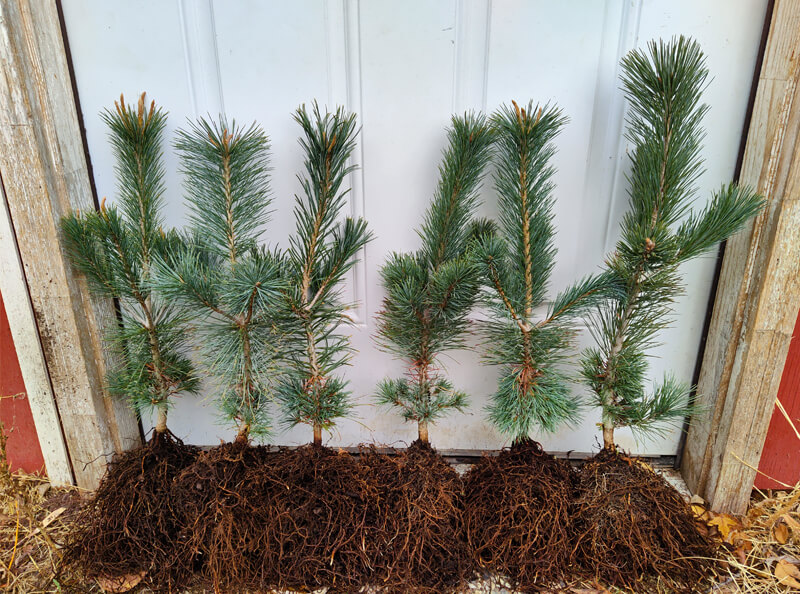 Excess soil is washed from the roots in preparation for shipping (18-24" White Pines) 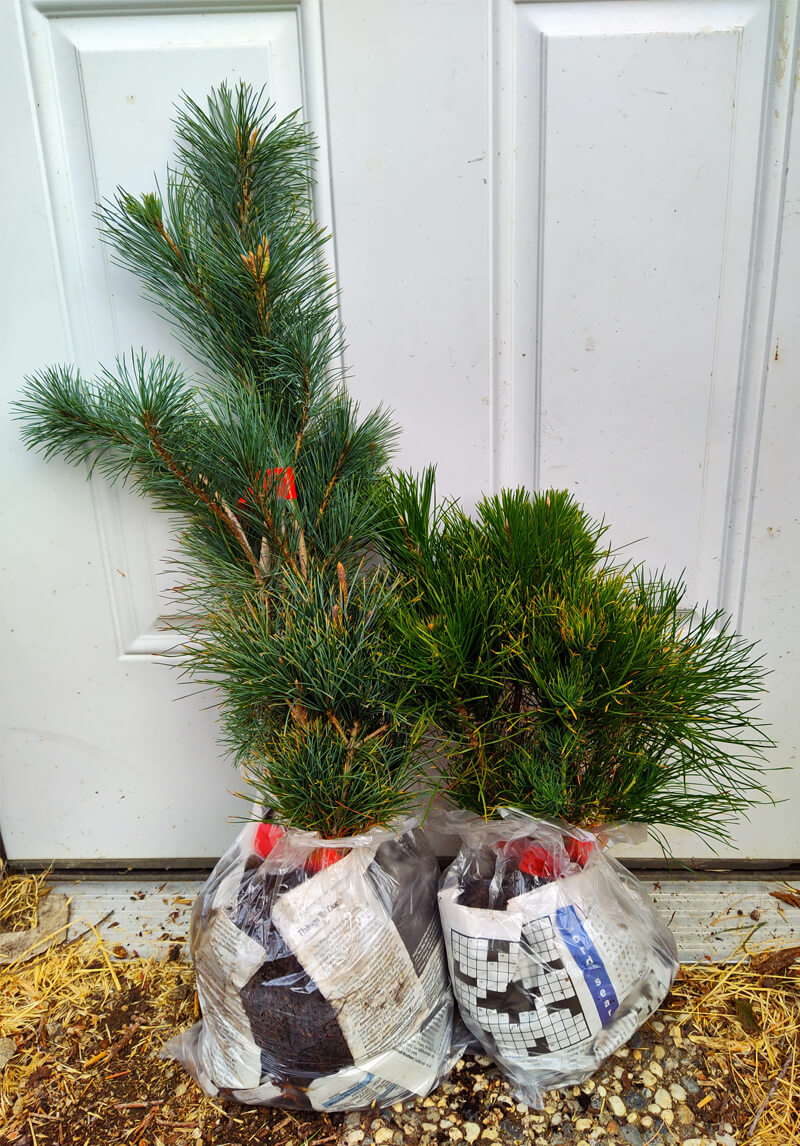 Plants are bundled together to fit in boxes  Bundles of plants are secured in long boxes. Plant Sizes 3 gallon Dawn Redwood 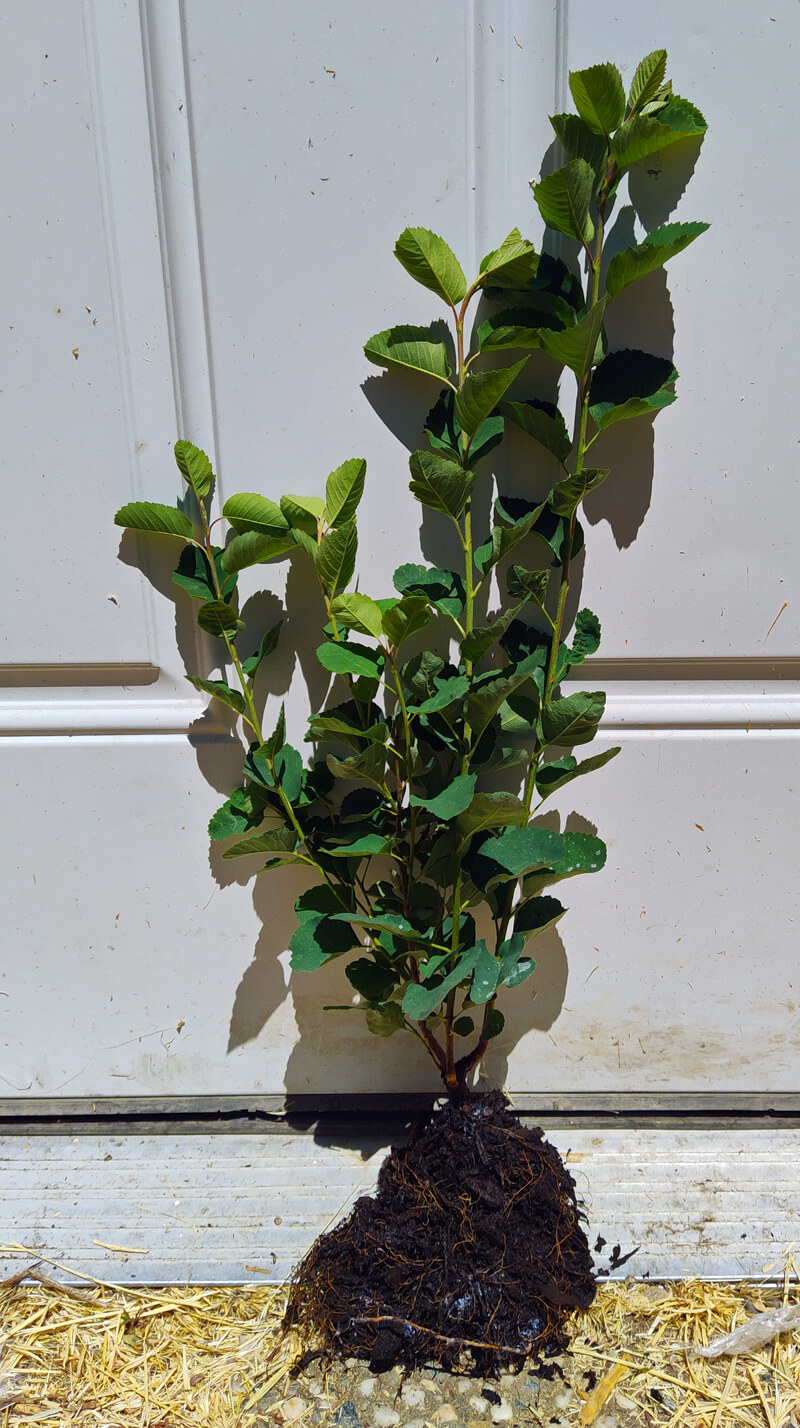 Standard quart shrub  Standard 14-18" multi-stem tree size  Standard deep plug pine tree Bamboo Plants Are Shipped In Their ContainersBamboo roots are not flexible and so plants have to be shipped in their containers. These plants are heavier and are shipped separately from bare root plants. Because they are potted they can handle longer transit times so can ship via UPS Ground instead of USPS Air Mail. Potted plants can also be shipped year-round.We regularly top our 1 gallon bamboo plants at 24-30 inches tall throughout the growing season. This results in dense, bushy foliage while allowing for economical shipping. From this size most running species will grow to 5-6 feet tall in the first spring and clumping species will usually grow to 4-5 feet tall.  1 gallon bamboo plants strapped in and ready to be sealed. Unpacking Bare Root PlantsYou will be sent tracking details as soon as your plants are shipped. Unpack your plants as quickly as possible after they are delivered. We use two types of boxes, side-sealing and top-sealing. For boxes that are taped along the whole length you can cut the tape on either side and remove the plant bundles by cutting the tape holding the bundle to the bottom. For boxes that are sealed on the top and bottom, it is easiet to open the bottom of the box (the shipping label is at the top) and pull the bundle of plants out straight out. Check that the box is empty as there can be a second bundle of plants stuck towards the top. A bundle of trees. What if I am not able to plant right away?You can usually leave the plants in their shipping container unopened for 1-2 days if there were no shipping delays and you have received your plants from late November through February. Plants shipped when it is warmer can't stay in their packages for as long.For longer term storage of plants you can pot them up or plant them in rows close together temporarily and then pull them out later in the spring to be planted again. This keeps the roots moist while allowing for air flow to the tops. The roots should have good contact with the soil to ensure they have access to adequate moisture. |
Size Availability
14 to 18 inches tall - 7 years old - $17.50 each
Ships free with orders of $75!*
Packed with a bagged root ball.
3 to 4 feet tall - lightly branched - $45.00 each
|
 Red Panda Nursery