
Giant Coast Redwood TreeSequoia sempervirensHeight: 300' average mature height Zones: 7-8 Find my zone Aspect: partial shade to full sun Watering: needs regular irrigation, about once per week during hot weather Maximum Water: tolerates wet soils with occasional summer flooding Habit: single stem or trunk Foliage: evergreen Growth Rate: fast Native To: CA, OR
Size Availability
Out of season.
4 to 6 inches tall - cold and heat tolerant clonal selections - $6.99 each 12 to 14 inches tall - $12.50 each 10 to 12 inches tall - deep plug - $12.50 each 3 to 4 feet tall - $65.00 each
Our main crop of most plants is available starting in late fall.
Additional batches of plugs and quarts are added throughout the year.
Many of our plants are propagated in limited quantities and can sell out quickly when posted, get on the notification list below so you don't miss out. Add your email to be notified as soon as we have them back in stock:
This does NOT subscribe your email to any mailing lists, our system will only send an inventory notification message.
Production notes: in production most years but is unavailable in some due to limited seed/division material or finicky propagation
The Giant Coastal Redwood is one of the most unique and amazing trees in the world, and has become very popular in cultivation worldwide. Although the species grows in a very limited range naturally, it grows in a very large number of conditions and survives in most environments as long as summer water is available. However, these trees are actually far more drought resistant than most people think. At our nursery in Medford, Oregon where average rainfall is about 19 inches with less than 3 of those occurring between June and September (when the average high is in the 90's with 100+ degrees being common, all with very low humidity (10-20% is the most common) we grow Coast Redwoods in the full sun with them being watered only twice each summer. Any landscape with summer watering will have enough moisture to grow this tree. Additionally, there are no major pests or diseases that might attack your tree and make it look sick and yellow. They are also more cold tolerant than most people think - our trees survived -5 degrees for two days straight without even leaf damage.

A massive trunk on a Coast Redwood Tree. 
Close up of the foliage on a potted tree.
One of the most interesting aspects of the Coast Redwood is its generation ability. In general, conifers can produce new growth only from existing buds - branches that are cut off will leave a permanently bare trunk, trees cut to the ground will yield a dead stump. Redwoods can produce new buds from old growth along the trunk or from the stump, which has actually been useful to us for maintaining low branching. Because other conifers can't regenerate low branches, pruning them causes dead spots on hedges. This is very true for Arborvitae, which deer tend to eat during the winter. In hard years they eat all the bottom branches, leaving a permanently bare trunk. We love using Redwoods for hedges because they can be continually topped and pruned and will stay dense and full. Additionally, the roots can regenerate and will handle disturbance such as digging or being buried deeper far better than most other trees. In the wild they are well adapted to growing in flood plains where rivers can deposit large amounts of silt over their roots.

Because they can regenerate growth, large trees will often grow with in clumps of multiple giant trunks. This creates amazing stands of redwoods in groves, and we personally prefer this look to single trunks. To force a single trunk, cut the smaller trunks in the winter so the plant focuses its growth on a single trunk.
Coast Redwoods are known for their incredible shade tolerance, and will grow straight and fast even in deep shade. They are one of our favorite conifers and is the first conifer we started propagating (again unlike many other conifers, Coast Redwoods can be propagated by stem cuttings). When given space and time, they will grow quite large, but they can also be pruned to a hedge or even kept as a bonsai. However, because of their fast growth and immense potential size, we don't recommend planting these in tight residential settings near buildings or property borders.
The Giant Coastal Redwood is the world's tallest tree, with some of the tallest growing to more than 300 feet high with trunks 30 feet in diameter! Redwoods are famous for their fast growth of up to seven or eight feet per year, massive sizes, and incredibly rot resistant wood. The tree's heartwood takes on a red color over time as decay resistant chemicals accumulate in the wood, which is fairly light and even grained. The wood is very strong and the huge demand for the incredible wood has left only very small populations of Redwoods unlogged. The species now only occupies a few percent of its original range and has been listed as an endangered tree. Luckily, a mature tree can produce 5-8 million seeds per year and although the seeds tend to have low viability, plenty of seedlings can be grown each year for reforestation.

Looking up the trunk of a redwood. 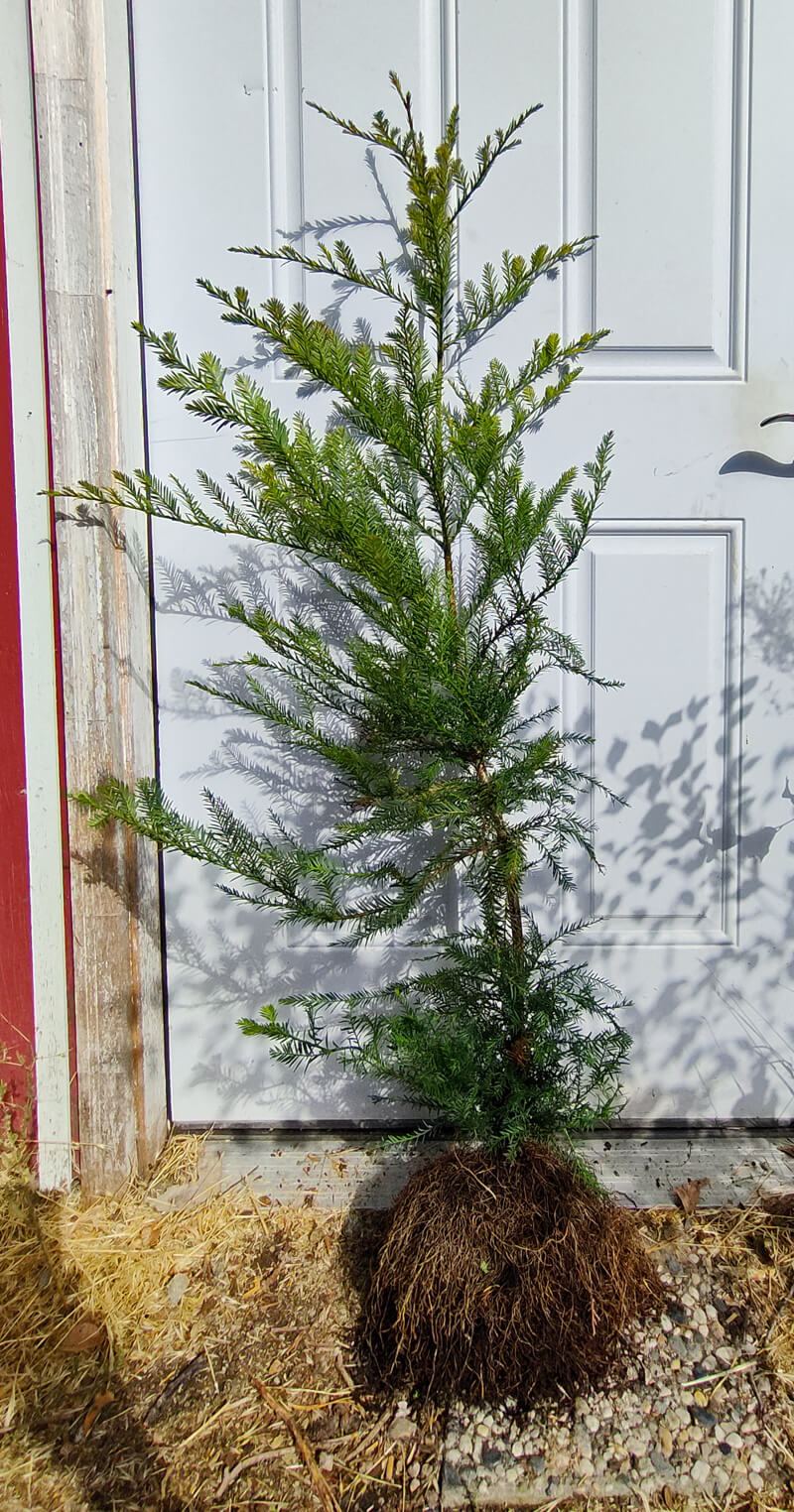
Sequoia sempervirens - Giant Coast Redwood Tree 3 to 4 feet tall

Looking up at a massive redwood. Packing Plants For ShippingWe pack our plants depending on the needs of each species and size, most plants ship best with the roots packed in moist sawdust or bark fines but some species don't like root disturbance and are shipped in a soil-less growing media.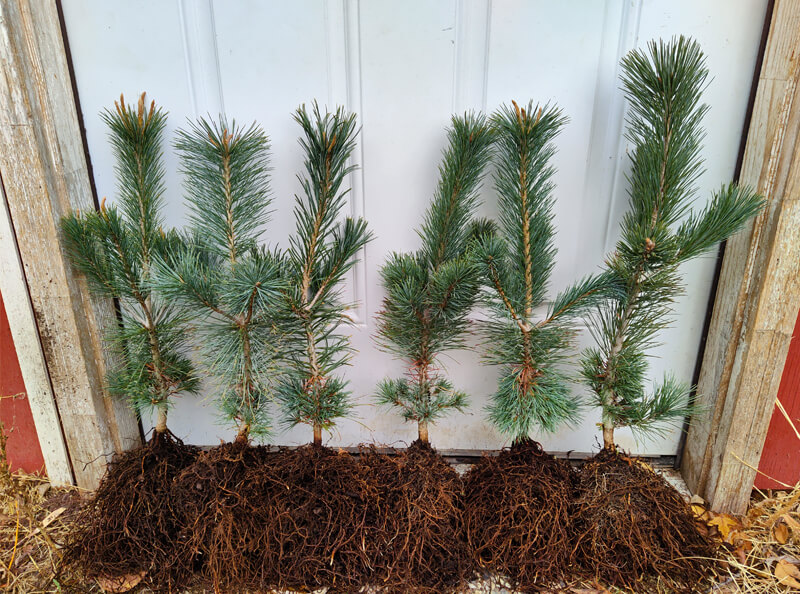 Excess soil is washed from the roots in preparation for shipping (18-24" White Pines) 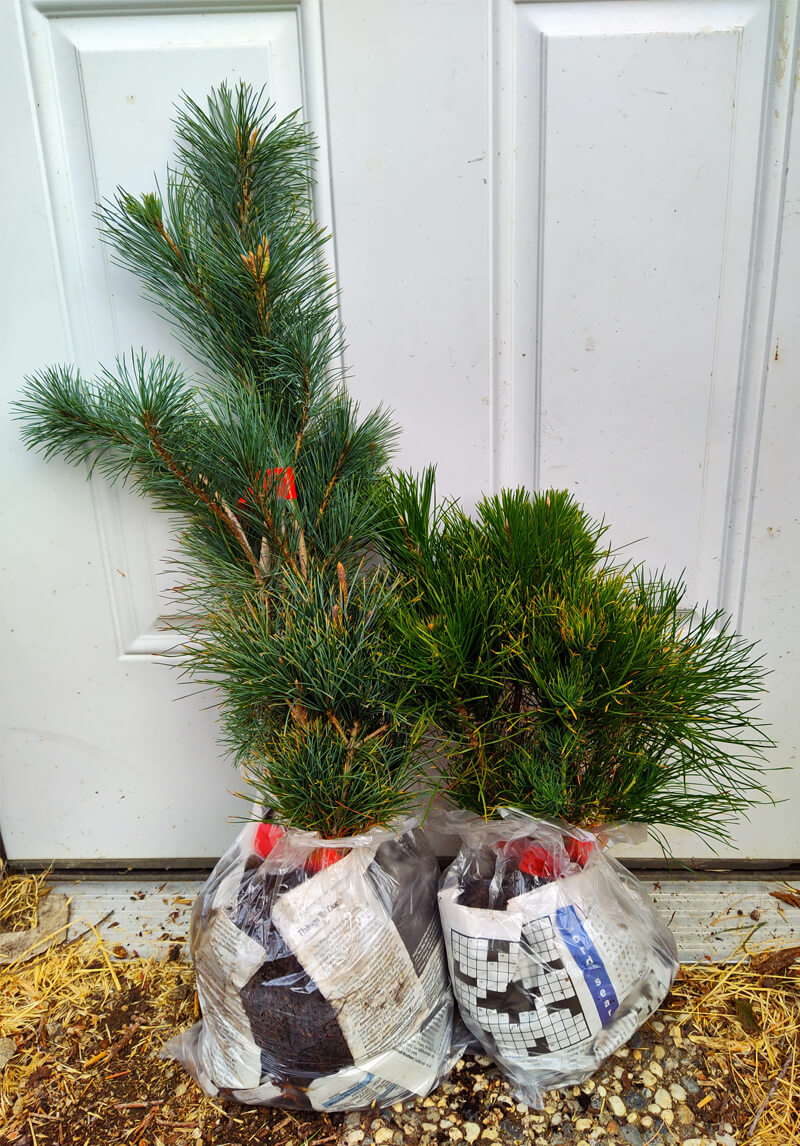 Plants are bundled together to fit in boxes  Bundles of plants are secured in long boxes. Plant Sizes 3 gallon Dawn Redwood 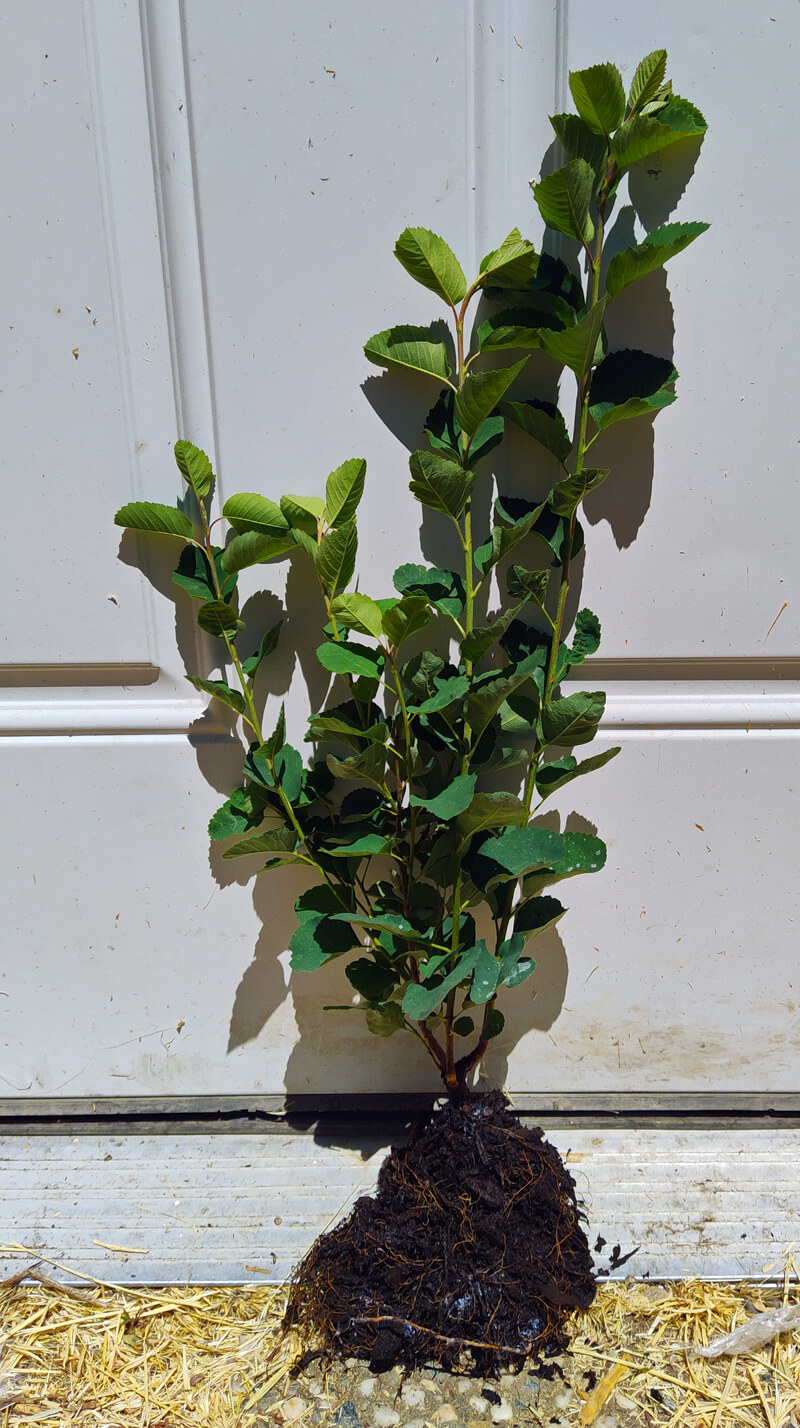 Standard quart shrub  Standard 14-18" multi-stem tree size  Standard deep plug pine tree Bamboo Plants Are Shipped In Their ContainersBamboo roots are not flexible and so plants have to be shipped in their containers. These plants are heavier and are shipped separately from bare root plants. Because they are potted they can handle longer transit times so can ship via UPS Ground instead of USPS Air Mail. Potted plants can also be shipped year-round.We regularly top our 1 gallon bamboo plants at 24-30 inches tall throughout the growing season. This results in dense, bushy foliage while allowing for economical shipping. From this size most running species will grow to 5-6 feet tall in the first spring and clumping species will usually grow to 4-5 feet tall.  1 gallon bamboo plants strapped in and ready to be sealed. Unpacking Bare Root PlantsYou will be sent tracking details as soon as your plants are shipped. Unpack your plants as quickly as possible after they are delivered. We use two types of boxes, side-sealing and top-sealing. For boxes that are taped along the whole length you can cut the tape on either side and remove the plant bundles by cutting the tape holding the bundle to the bottom. For boxes that are sealed on the top and bottom, it is easiet to open the bottom of the box (the shipping label is at the top) and pull the bundle of plants out straight out. Check that the box is empty as there can be a second bundle of plants stuck towards the top. A bundle of trees. What if I am not able to plant right away?You can usually leave the plants in their shipping container unopened for 1-2 days if there were no shipping delays and you have received your plants from late November through February. Plants shipped when it is warmer can't stay in their packages for as long.For longer term storage of plants you can pot them up or plant them in rows close together temporarily and then pull them out later in the spring to be planted again. This keeps the roots moist while allowing for air flow to the tops. The roots should have good contact with the soil to ensure they have access to adequate moisture. |
Size Availability
Out of season.
4 to 6 inches tall - cold and heat tolerant clonal selections - $6.99 each 12 to 14 inches tall - $12.50 each 10 to 12 inches tall - deep plug - $12.50 each 3 to 4 feet tall - $65.00 each
Our main crop of most plants is available starting in late fall.
Additional batches of plugs and quarts are added throughout the year.
Many of our plants are propagated in limited quantities and can sell out quickly when posted, get on the notification list below so you don't miss out. Add your email to be notified as soon as we have them back in stock:
This does NOT subscribe your email to any mailing lists, our system will only send an inventory notification message.
Production notes: in production most years but is unavailable in some due to limited seed/division material or finicky propagation
|
 Red Panda Nursery