
Giant SequoiaSequoiadendron giganteumHeight: 200' average mature height Zones: 6-8 Find my zone Aspect: mostly sun to full sun Watering: needs occasional summer irrigation, about one deep watering cycle per month once established Maximum Water: tolerates wet soils with occasional summer flooding Habit: single stem or trunk Foliage: evergreen Growth Rate: fast Native To: CA
Size Availability
A gorgeous tree that quickly grows very dense foliage in a pyramidal/conical form without any pruning. Closely related to the Giant Coast Redwood, this Sierra Redwood grows in California's Sierra Mountains and so is adapted to significantly colder winters and hotter summers than the Coast Redwood. There are very few trees growing in the wild, in fact the National Park Service has an actual count of every known tree in its range. However, this species doesn't require very many trees to attract attention as some of those at the Giant Sequoia National Park are nearly 3,000 years old and stand around 280 feet tall, with trunk diameters of over 30 feet. 30 feet is more than it sounds, that diameter can be matched by
five
people
six feet tall
laying head to feet in a line!
Out of season.
6 to 8 inches tall - $7.50 each deep plug - 10 to 14 inches tall - $9.99 each 1 gallon - $12.50 each 2 to 3 feet tall - $19.99 each
Our main crop of most plants is available starting in late fall.
Additional batches of plugs and quarts are added throughout the year.
Many of our plants are propagated in limited quantities and can sell out quickly when posted, get on the notification list below so you don't miss out. Add your email to be notified as soon as we have them back in stock:
This does NOT subscribe your email to any mailing lists, our system will only send an inventory notification message.
Production notes: reliable production Luckily, this fantastic tree can be grown in medium sized landscapes because, although it will always be a large tree, it doesn't reach excessive sizes until several hundred years. Just be careful not to plant this tree right against buildings or power lines that will cause headaches a generation or two from now. Here in the Rogue Valley, this is a very common tree seen in various parks, roadways, and home gardens (in fact there is an excellent 100' tall specimen across the street from our nursery) and is popular because of its strong wood, fast growth and large trunk diameter.
Giant Sequoias are significantly more heat and drought tolerant than Coast Redwoods (being native to inland Northern California, it has to be!). As a real-world test for drought and heat tolerance there is a stand of trees growing in a rest stop not far from our nursery in Southern Oregon that has thrived with no intervention since planting. The trees are about 40 feet tall and are growing happily with no summer irrigation in a climate where temperatures often reach near 100 degrees with very low humidity and infrequent to non-existent summer rainfall. Years later, we found a far more impressive testament to the Giant Sequoia's drought tolerance growing alongside a logging road in the hills above the Applegate River. It appears that a Sequoia was planted with Douglas Fir after a clear cut - perhaps an errant seed got into the wrong bed at the Forest Service seed nursery and the seedling was put there by planting crews. But it grows happily on a steep hillside in the full sun alongside Ponderosa Pine and Douglas Fir on a dry, rocky slope.
Why do these trees stay smaller in landscapes?
Although the Giant Sequoia gets massive anywhere it is happy, it will typically stay closer to 70 feet tall as opposed to 250 feet or more. First of all obviously it takes quite a long time for a tree to grow hundreds of feet tall, but even old trees seem to hit their height limits early in landscapes. This is primarily due to the isolation of a single large tree. By 70-100 feet above ground level there is little shelter from wind provided by other trees and ground topography. High winds at the top of the tree can easily damage the fragile growing tip, causing it to have to re-develop several times each year which causes the growth rate to slow down significantly or even stop. In their native environment there are many other large Sequoias of similar heights that provide wind shelter and allow each other to attain much larger heights.

Potted one gallon Giant Sequoia Redwoods 
Potted two gallon Giant Sequoia Redwood ready to ship. 
Our Deep Plug Size for spring of 2018. 
Sequoiadendron giganteum - Giant Sequoia quart size
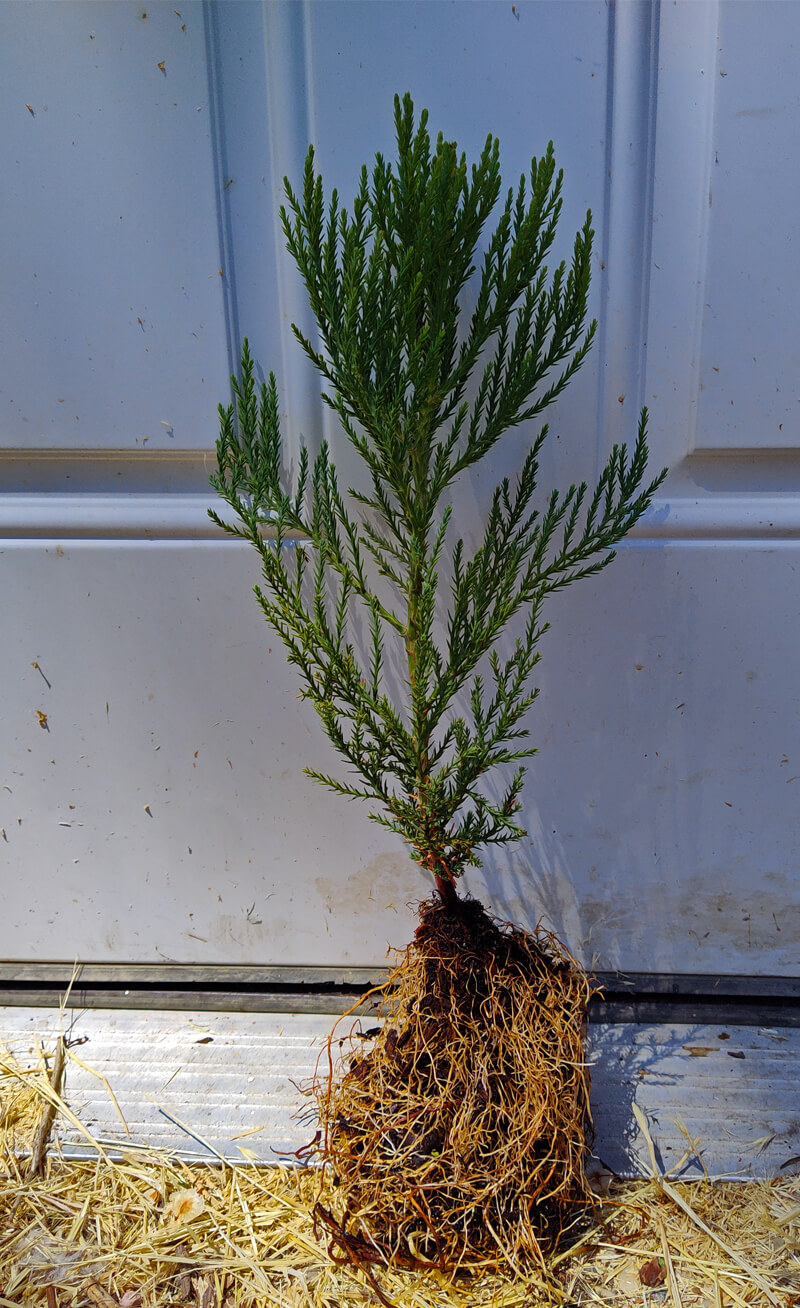
Sequoiadendron giganteum - Giant Sequoia quart size

Sequoiadendron giganteum - Giant Sequoia
Source: Commons

Sequoiadendron giganteum - Giant Sequoia
Source: Commons

Sequoiadendron giganteum - Giant Sequoia
Source: Commons

Sequoiadendron giganteum - Giant Sequoia
Source: Commons
Packing Plants For ShippingWe pack our plants depending on the needs of each species and size, most plants ship best with the roots packed in moist sawdust or bark fines but some species don't like root disturbance and are shipped in a soil-less growing media.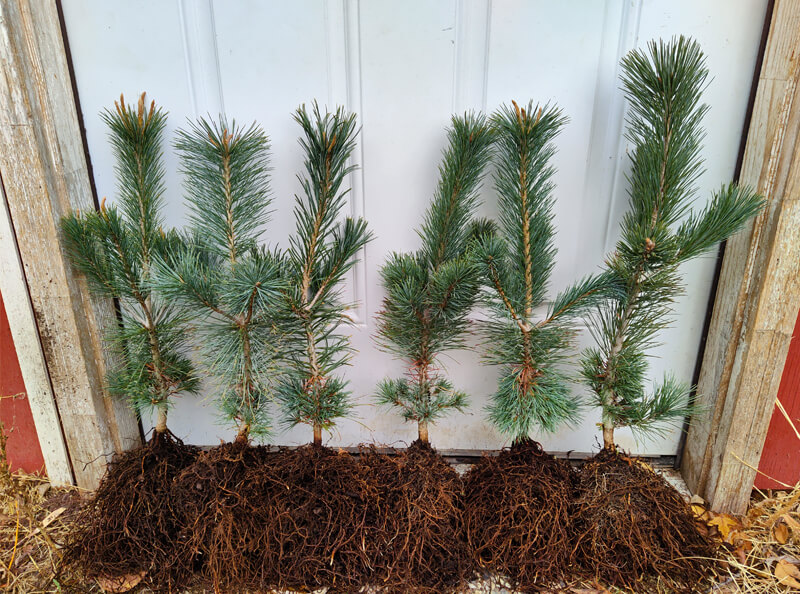 Excess soil is washed from the roots in preparation for shipping (18-24" White Pines) 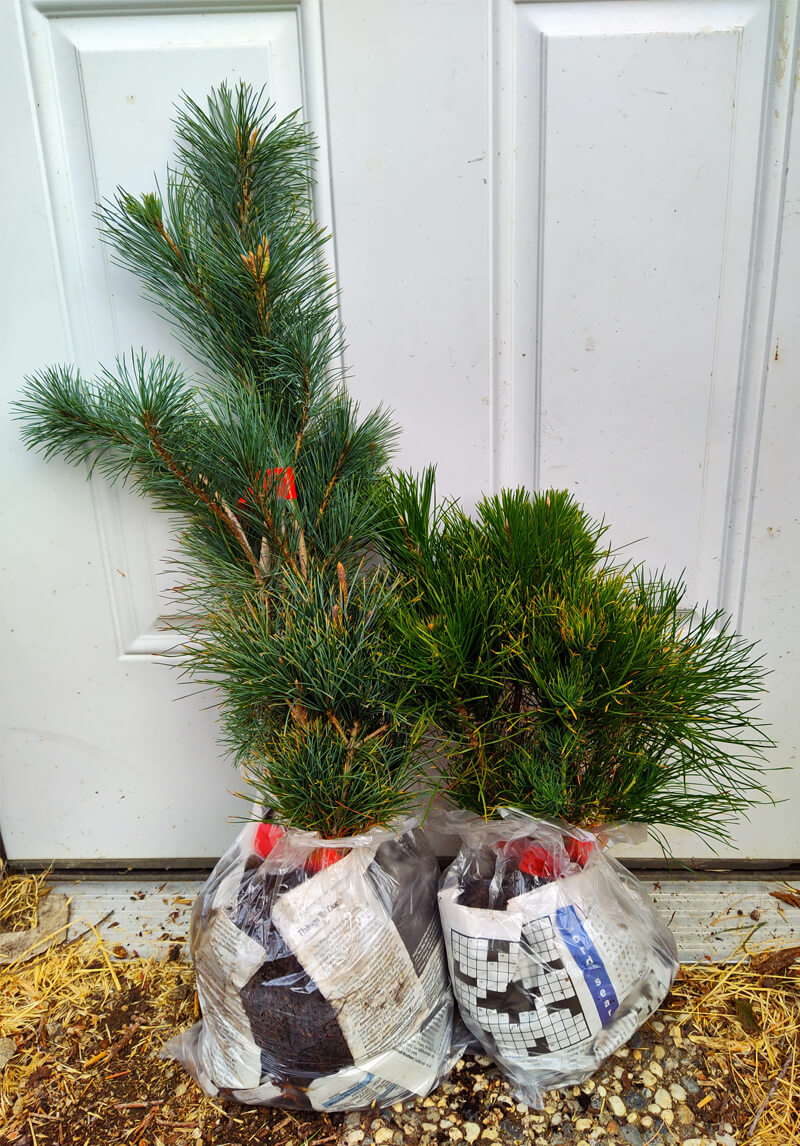 Plants are bundled together to fit in boxes  Bundles of plants are secured in long boxes. Plant Sizes 3 gallon Dawn Redwood 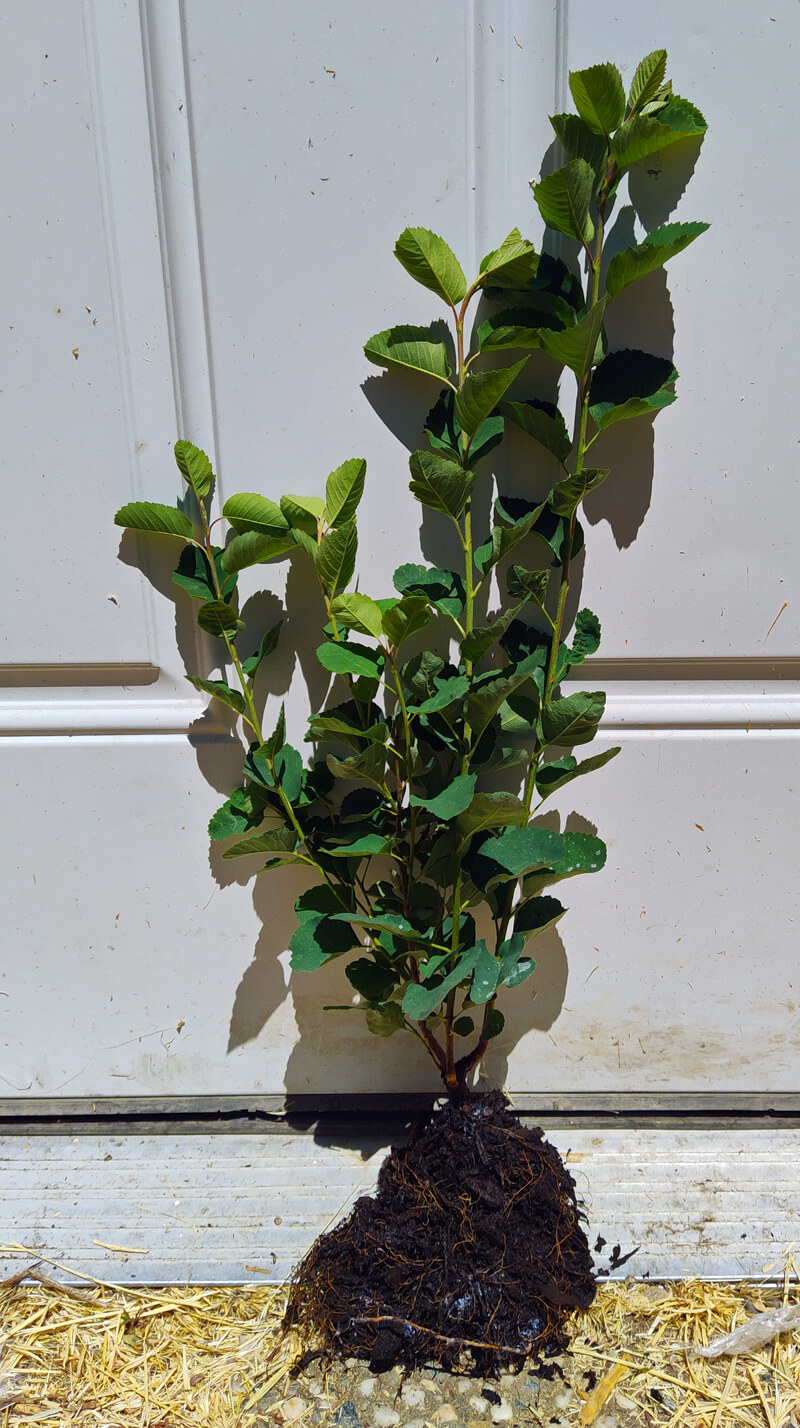 Standard quart shrub  Standard 14-18" multi-stem tree size  Standard deep plug pine tree Bamboo Plants Are Shipped In Their ContainersBamboo roots are not flexible and so plants have to be shipped in their containers. These plants are heavier and are shipped separately from bare root plants. Because they are potted they can handle longer transit times so can ship via UPS Ground instead of USPS Air Mail. Potted plants can also be shipped year-round.We regularly top our 1 gallon bamboo plants at 24-30 inches tall throughout the growing season. This results in dense, bushy foliage while allowing for economical shipping. From this size most running species will grow to 5-6 feet tall in the first spring and clumping species will usually grow to 4-5 feet tall.  1 gallon bamboo plants strapped in and ready to be sealed. Unpacking Bare Root PlantsYou will be sent tracking details as soon as your plants are shipped. Unpack your plants as quickly as possible after they are delivered. We use two types of boxes, side-sealing and top-sealing. For boxes that are taped along the whole length you can cut the tape on either side and remove the plant bundles by cutting the tape holding the bundle to the bottom. For boxes that are sealed on the top and bottom, it is easiet to open the bottom of the box (the shipping label is at the top) and pull the bundle of plants out straight out. Check that the box is empty as there can be a second bundle of plants stuck towards the top. A bundle of trees. What if I am not able to plant right away?You can usually leave the plants in their shipping container unopened for 1-2 days if there were no shipping delays and you have received your plants from late November through February. Plants shipped when it is warmer can't stay in their packages for as long.For longer term storage of plants you can pot them up or plant them in rows close together temporarily and then pull them out later in the spring to be planted again. This keeps the roots moist while allowing for air flow to the tops. The roots should have good contact with the soil to ensure they have access to adequate moisture. |
Size Availability
Out of season.
6 to 8 inches tall - $7.50 each deep plug - 10 to 14 inches tall - $9.99 each 1 gallon - $12.50 each 2 to 3 feet tall - $19.99 each
Our main crop of most plants is available starting in late fall.
Additional batches of plugs and quarts are added throughout the year.
Many of our plants are propagated in limited quantities and can sell out quickly when posted, get on the notification list below so you don't miss out. Add your email to be notified as soon as we have them back in stock:
This does NOT subscribe your email to any mailing lists, our system will only send an inventory notification message.
Production notes: reliable production
|
 Red Panda Nursery


