
Western SalmonberryRubus spectabilisHeight: 5' average mature height Zones: 4-8 Find my zone Aspect: mostly shade to mostly sun, full sun in cooler climates Watering: needs regular irrigation, about once per week during hot weather Maximum Water: tolerates wet soils with occasional summer flooding Habit: spreads quickly by the roots Foliage: deciduous Growth Rate: medium Native To: AK, CA, ID, OR, WA
Size Availability
deep band - $8.50 each
Bulk Pricing: $7.50 each for 5 or more - 12% off Bulk Pricing: $5.50 each for 100 or more - 35% off
Ships free with orders of $75!*Packed with a bagged root ball.
2 gallon - $25.00 each
Bulk Pricing: $18.00 each for 100 or more - 28% off
Ships free with orders of $75!*Packed with a bagged root ball.
Production notes: reliable production
An ornamental purple-flowering raspberry! Salmonberries,
Rubus spectabilis
, is a fast-growing vine native to the Pacific coast and is primarily found in the Cascade mountain range. It produces bright pink and purple flowers in the spring which are following by bright red-orange raspberries which ripen earlier than the fruit on most other species. When ripe the fruit are sweet and very juicy but before fully ripe they can be quite tart so be sure to wait to pick them until they turn from green.
Salmonberry plants establish quickly and typically fruit in 1-2 years from our 16-18" size, they are also self-fertile so a single plant can produce fruit. They are tolerant of growing in very wet soils and can be found growing in wetlands but will typically fruit better when grown under normal garden conditions. Salmonberries are adapted to growing in shade and is one of the few plants that bear fruit in shady locations, although at least part sun will yield sweeter fruit than plants in full shade. In very hot climates avoid planting these in full sun locations.
This species is naturally far less thorny than other raspberry species, typically the prickles are short and spaced far apart which makes handling easy. Most of the canes don't seem to have any prickles at all and when digging out bare root plants in the fall we don't need to use gloves for handling like other raspberry varieties.

The brightly color flowers are up to two inches across
Source: Commons
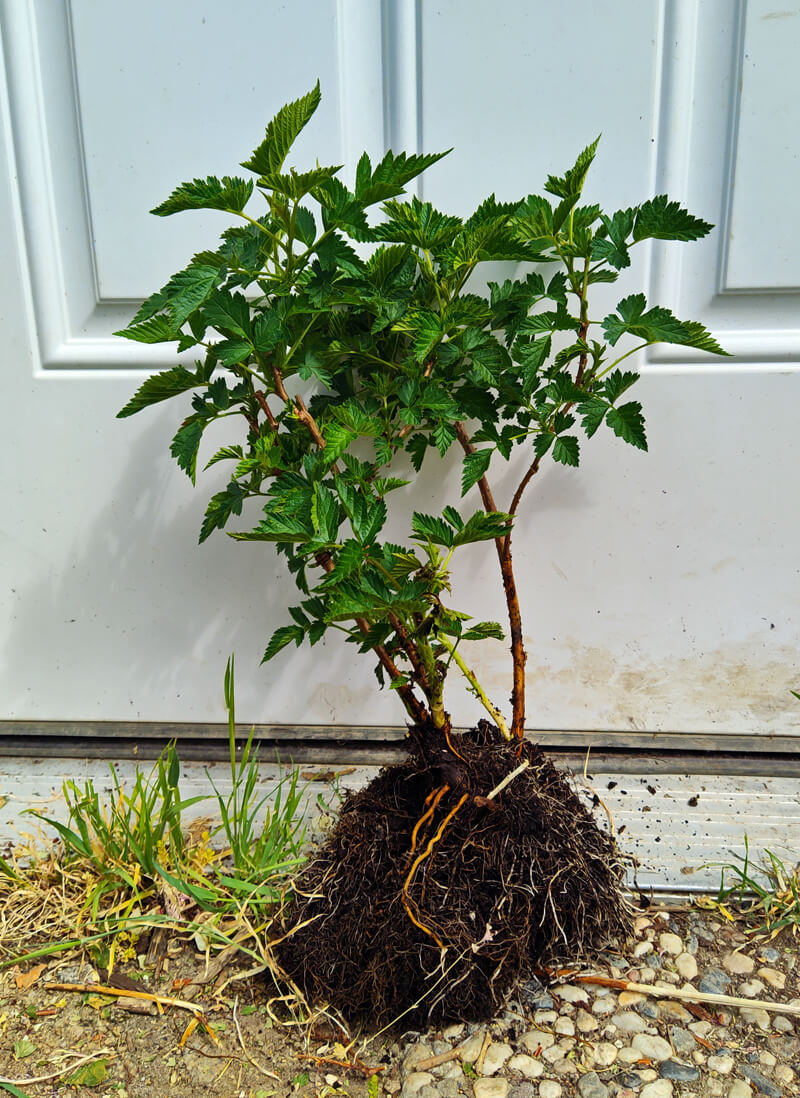
Rubus spectabilis - Western Salmonberry quart size in spring

Close up of a flower just opening
Source: Commons

A brightly colored flower
Source: Commons

A dark colored flower
Source: Commons

New growth pushing out in the spring behind an opening flower
Source: Commons

Harvested raspberries
Source: Commons
Packing Plants For ShippingWe pack our plants depending on the needs of each species and size, most plants ship best with the roots packed in moist sawdust or bark fines but some species don't like root disturbance and are shipped in a soil-less growing media.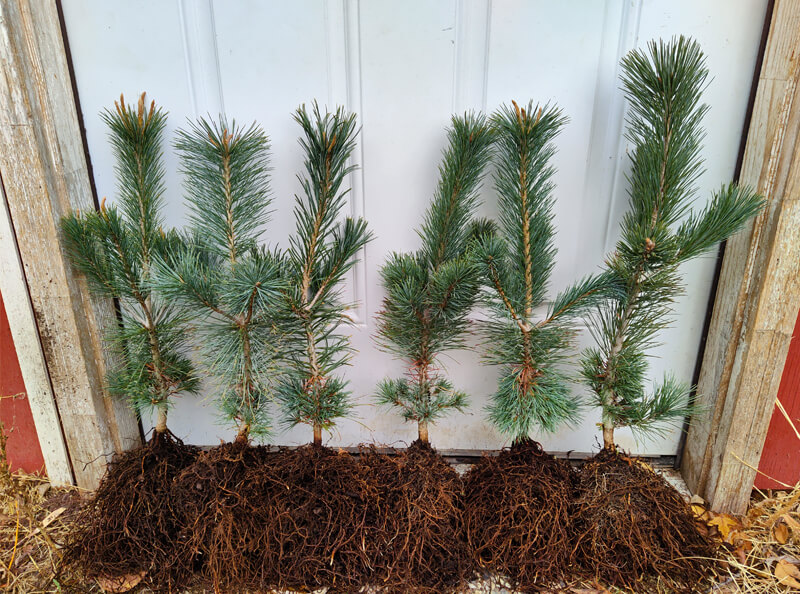 Excess soil is washed from the roots in preparation for shipping (18-24" White Pines) 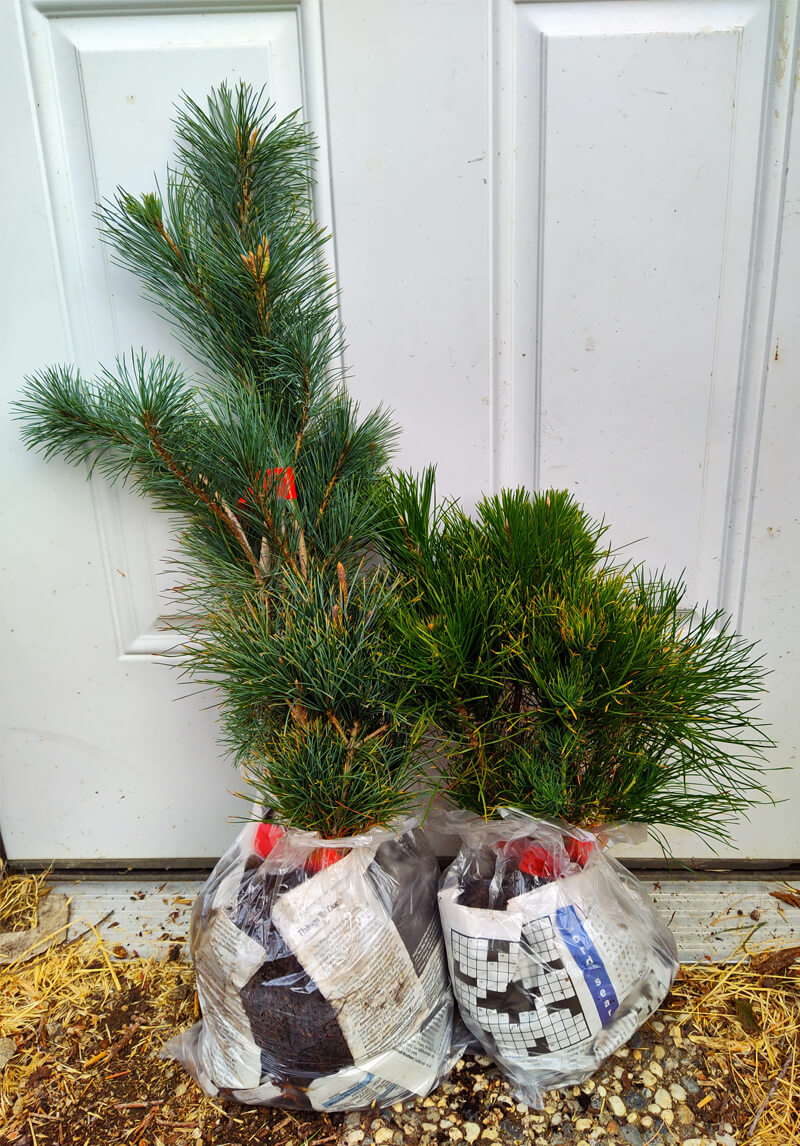 Plants are bundled together to fit in boxes  Bundles of plants are secured in long boxes. Plant Sizes 3 gallon Dawn Redwood 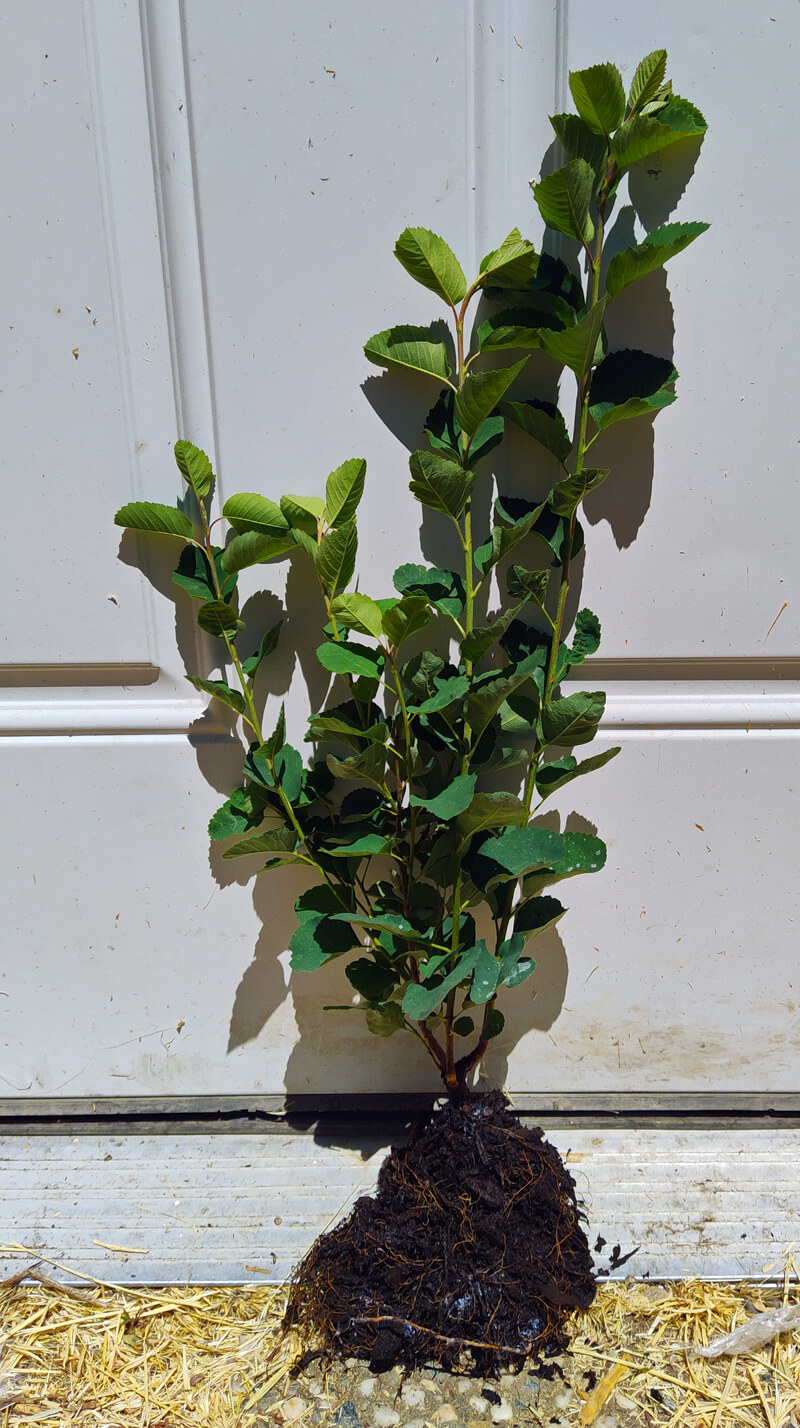 Standard quart shrub  Standard 14-18" multi-stem tree size  Standard deep plug pine tree Bamboo Plants Are Shipped In Their ContainersBamboo roots are not flexible and so plants have to be shipped in their containers. These plants are heavier and are shipped separately from bare root plants. Because they are potted they can handle longer transit times so can ship via UPS Ground instead of USPS Air Mail. Potted plants can also be shipped year-round.We regularly top our 1 gallon bamboo plants at 24-30 inches tall throughout the growing season. This results in dense, bushy foliage while allowing for economical shipping. From this size most running species will grow to 5-6 feet tall in the first spring and clumping species will usually grow to 4-5 feet tall.  1 gallon bamboo plants strapped in and ready to be sealed. Unpacking Bare Root PlantsYou will be sent tracking details as soon as your plants are shipped. Unpack your plants as quickly as possible after they are delivered. We use two types of boxes, side-sealing and top-sealing. For boxes that are taped along the whole length you can cut the tape on either side and remove the plant bundles by cutting the tape holding the bundle to the bottom. For boxes that are sealed on the top and bottom, it is easiet to open the bottom of the box (the shipping label is at the top) and pull the bundle of plants out straight out. Check that the box is empty as there can be a second bundle of plants stuck towards the top. A bundle of trees. What if I am not able to plant right away?You can usually leave the plants in their shipping container unopened for 1-2 days if there were no shipping delays and you have received your plants from late November through February. Plants shipped when it is warmer can't stay in their packages for as long.For longer term storage of plants you can pot them up or plant them in rows close together temporarily and then pull them out later in the spring to be planted again. This keeps the roots moist while allowing for air flow to the tops. The roots should have good contact with the soil to ensure they have access to adequate moisture. |
Size Availability
deep band - $8.50 each
Bulk Pricing: $7.50 each for 5 or more - 12% off Bulk Pricing: $5.50 each for 100 or more - 35% off
Ships free with orders of $75!*Packed with a bagged root ball.
2 gallon - $25.00 each
Bulk Pricing: $18.00 each for 100 or more - 28% off
Ships free with orders of $75!*Packed with a bagged root ball.
Production notes: reliable production
|
 Red Panda Nursery