
Fruiting PomegranatePunica granatumHeight: 15' average mature height Zones: 8-8 Find my zone Aspect: mostly sun to full sun Watering: needs occasional summer irrigation, about one deep watering cycle per month once established Maximum Water: tolerates occasional winter flooding but needs drier soil in the summer Habit: clump forming with multiple stems Foliage: deciduous Growth Rate: medium
Size Availability
Out of season.
Our main crop of most plants is available starting in late fall.
Additional batches of plugs and quarts are added throughout the year.
Many of our plants are propagated in limited quantities and can sell out quickly when posted, get on the notification list below so you don't miss out. Add your email to be notified as soon as we have them back in stock:
This does NOT subscribe your email to any mailing lists, our system will only send an inventory notification message.
Production notes: in production most years but is unavailable in some due to limited seed/division material or finicky propagation
The Hardy Fruiting Pomegranate is a self-fertile species that tolerates winter temperatures down to around 10 degrees Fahrenheit. It typically takes 3-4 years to begin fruiting and can pruned into a 5-6 foot tall shrub or left to develop into a small multi-stemmed tree. Plants will need good sun exposure to ripen their fruit before the fall frosts and should be planted in exposed areas. Although the trees are drought tolerant they will produce much better fruit yields with regular summer irrigation and annual applications of mulch.
Varieties
'Kashmir' is a semi-dwarf selection that is better suited to growing in containers. Trees will do best if grown in at least a 15 gallon container, preferably a fabric pot (such as Root Pouch or SmartPot brands) which allows for better soil aeration and root development. Be sure to fertilize container-grown plants with a slow release pellet like Osmocote each spring. You can bring your tree indoors over the winter if you live in a cold climate, we have found that plants do better if put in an unheated garage near a window that allows the trees to go dormant rather than trying to provide enough light in a heated room.
 Pomegranate fruit
Source: Commons
 Pomegranate flower
Source: Commons
 Pomegranate flower
Source: Commons
 Pomegranate flower
Source: Commons
 Pomegranate folaige
Source: Commons
 Pomegranate fruit developing
Source: Commons
Packing Plants For ShippingWe pack our plants depending on the needs of each species and size, most plants ship best with the roots packed in moist sawdust or bark fines but some species don't like root disturbance and are shipped in a soil-less growing media.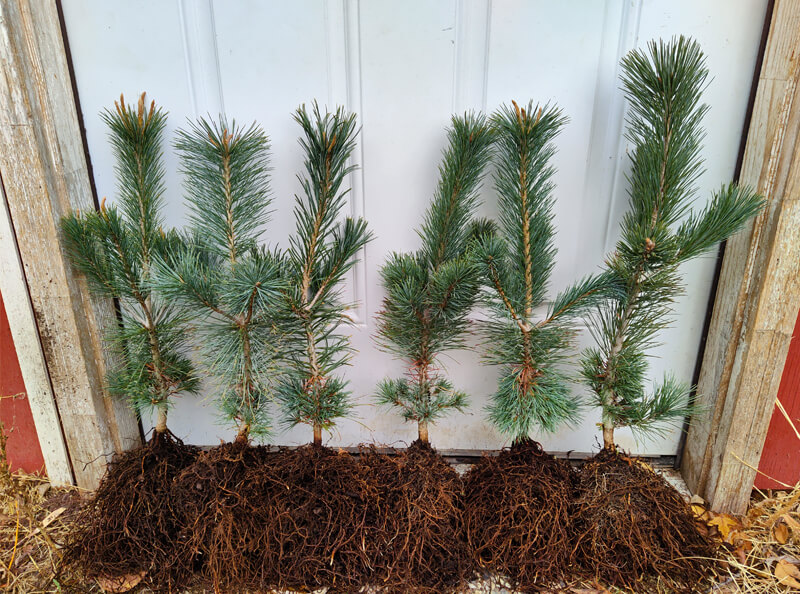 Excess soil is washed from the roots in preparation for shipping (18-24" White Pines) 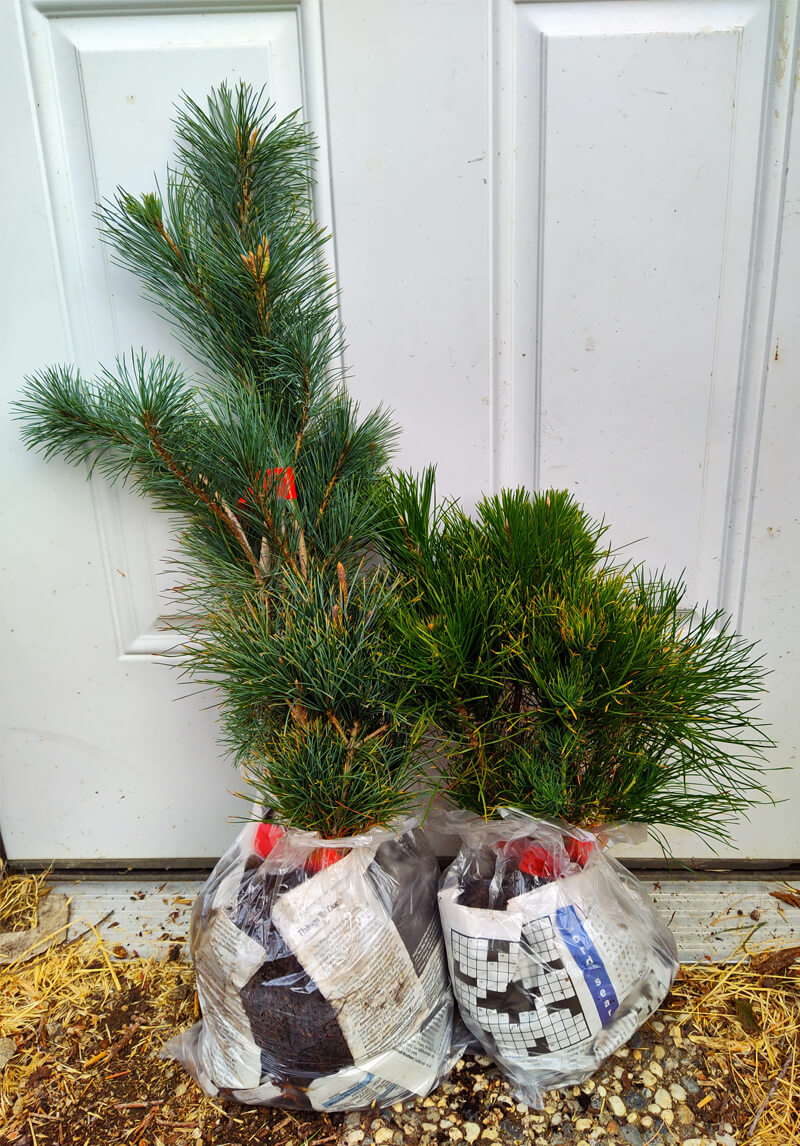 Plants are bundled together to fit in boxes  Bundles of plants are secured in long boxes. Plant Sizes 3 gallon Dawn Redwood 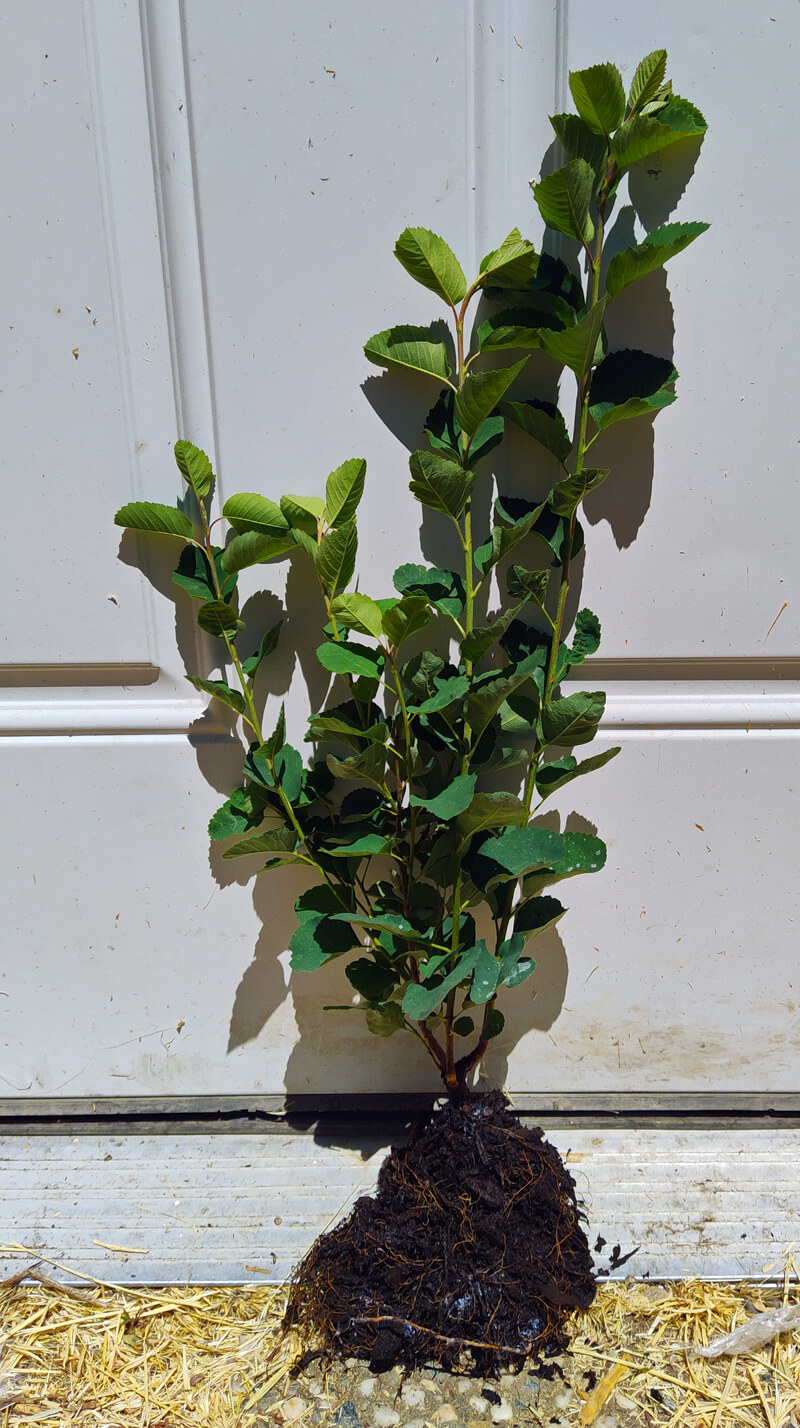 Standard quart shrub  Standard 14-18" multi-stem tree size  Standard deep plug pine tree Bamboo Plants Are Shipped In Their ContainersBamboo roots are not flexible and so plants have to be shipped in their containers. These plants are heavier and are shipped separately from bare root plants. Because they are potted they can handle longer transit times so can ship via UPS Ground instead of USPS Air Mail. Potted plants can also be shipped year-round.We regularly top our 1 gallon bamboo plants at 24-30 inches tall throughout the growing season. This results in dense, bushy foliage while allowing for economical shipping. From this size most running species will grow to 5-6 feet tall in the first spring and clumping species will usually grow to 4-5 feet tall.  1 gallon bamboo plants strapped in and ready to be sealed. Unpacking Bare Root PlantsYou will be sent tracking details as soon as your plants are shipped. Unpack your plants as quickly as possible after they are delivered. We use two types of boxes, side-sealing and top-sealing. For boxes that are taped along the whole length you can cut the tape on either side and remove the plant bundles by cutting the tape holding the bundle to the bottom. For boxes that are sealed on the top and bottom, it is easiet to open the bottom of the box (the shipping label is at the top) and pull the bundle of plants out straight out. Check that the box is empty as there can be a second bundle of plants stuck towards the top. A bundle of trees. What if I am not able to plant right away?You can usually leave the plants in their shipping container unopened for 1-2 days if there were no shipping delays and you have received your plants from late November through February. Plants shipped when it is warmer can't stay in their packages for as long.For longer term storage of plants you can pot them up or plant them in rows close together temporarily and then pull them out later in the spring to be planted again. This keeps the roots moist while allowing for air flow to the tops. The roots should have good contact with the soil to ensure they have access to adequate moisture. |
Size Availability
Out of season.
Our main crop of most plants is available starting in late fall.
Additional batches of plugs and quarts are added throughout the year.
Many of our plants are propagated in limited quantities and can sell out quickly when posted, get on the notification list below so you don't miss out. Add your email to be notified as soon as we have them back in stock:
This does NOT subscribe your email to any mailing lists, our system will only send an inventory notification message.
Production notes: in production most years but is unavailable in some due to limited seed/division material or finicky propagation
|
 Red Panda Nursery