
Sugar PinePinus lambertianaHeight: 100' average mature height Zones: 7-8 Find my zone Aspect: partial shade to full sun Watering: needs occasional summer irrigation, about one deep watering cycle per month once established Maximum Water: tolerates occasional winter flooding but needs drier soil in the summer Habit: single stem or trunk Foliage: evergreen Native To: CA, NV, OR
This plant can't be shipped to California, Hawaii, Montana
Size Availability
Out of season.
deep plug seedling - $9.97 each
Our main crop of most plants is available starting in late fall.
Additional batches of plugs and quarts are added throughout the year.
Many of our plants are propagated in limited quantities and can sell out quickly when posted, get on the notification list below so you don't miss out. Add your email to be notified as soon as we have them back in stock:
This does NOT subscribe your email to any mailing lists, our system will only send an inventory notification message.
The sugar pine is one of our personal favorite pine species because of its beautiful soft foliage and even growth. Mature trees are decorated with massive pine cones that hang from slightly weeping branches and drop large, edible seeds. Because of the open and drooping branching pattern, Sugar Pines are easy to spot growing on hot and dry hillsides in their native range.
In the landscape, Sugar Pines are very useful because of their drought and heat tolerance as well as slower growth compared to other pine species, which can quickly overshadow all the other plants in your landscape. Even though their eventual size is massive, they are well suited to smaller landscapes and are one of the most popular bonsai trees. Most trees will grow about six inches to one foot per year in height and take well to shaping and pruning in any style garden.
Sugar Pines are members of the White Pine group, which all have needles in groups of five. They have a silvery-blue streak on the undersides of the needles that give them their distinctive sheen.
We have found Sugar Pines to be difficult to grow in the nursery, we sow seeds every year but we only have a successful crop every so often so availability is often sporadic. Seedlings seem to be sensitive to damping off if the spring is too humid and cool but also don't like the early heat that tends to come with drier springs. Seedlings don't seem to have much heat tolerance until they are several months old, but most years we tend to get at least a few days over 100 degrees early.
Coming Across Massive Sugar Pines in the Wild
After backpacking for several days in the upper drainage of the Applegate, numerous massive Sugar Pine trees started appearing alongside the (almost non-existent) trail that towered over even the largest trees of other species in the forest. This fact was made even more impressive by the fact that the average tree throughout this forest seemed to be at least 100 feet tall - seeing Douglas-fir with diameters of 5-6 feet was actually quite common. But some of these sugar pines seemed to match the size of many large specimens of Coastal Redwood common throughout the coast of Northern California, the tallest of which are famous for being the tallest trees in the world.
These sugar pines must have been larger than at least half of the Coast Redwoods I had ever seen, and the lowest branches of these behemoths didn't start until well above the forest of Chinquapin some 40 feet above the forest floor. Piles of composted pine needles that surrounded the tree appeared to be up to three feet deep, the result of hundreds and perhaps thousands of years of needle drop. The trees truly seemed ancient, slowly growing and persisting through countless floods, droughts, and landslides. Hiking through these valleys for several days, a pattern seemed to appear in where these massive trees would grow. They were always in flat plateaus near the bottom of individual valleys but up against steep hills or cliffs. The steep terrain of the area protected these trees from logging, and the ample snow runoff during the summer months protected them from the severe wildfires common here during drought years.
For the fifteen or so giant Sugar Pine trees that can be found along the trail, these conditions must aligned perfectly to allow the trees to thrive and make a beautiful forest far more so. And after seeing specimens far more impressive than could be put into words, I ordered hundreds of seedlings to grow on and share with others, as well as plant around the nursery.

Sugar pine cones developing in mid-summer.
Source: Wikipedia.

Sugar pine cones developing in mid-summer.
Source: Wikipedia.

Sugar pine cones growing on a tree.
Source: Wikipedia.

Sugar Pine trees produce the world's largest pine cone!
Source: Wikipedia.

Typical pine seedling for 72 cell plug size (fall 2019 crop) 
Potted Sugar Pine seedling. 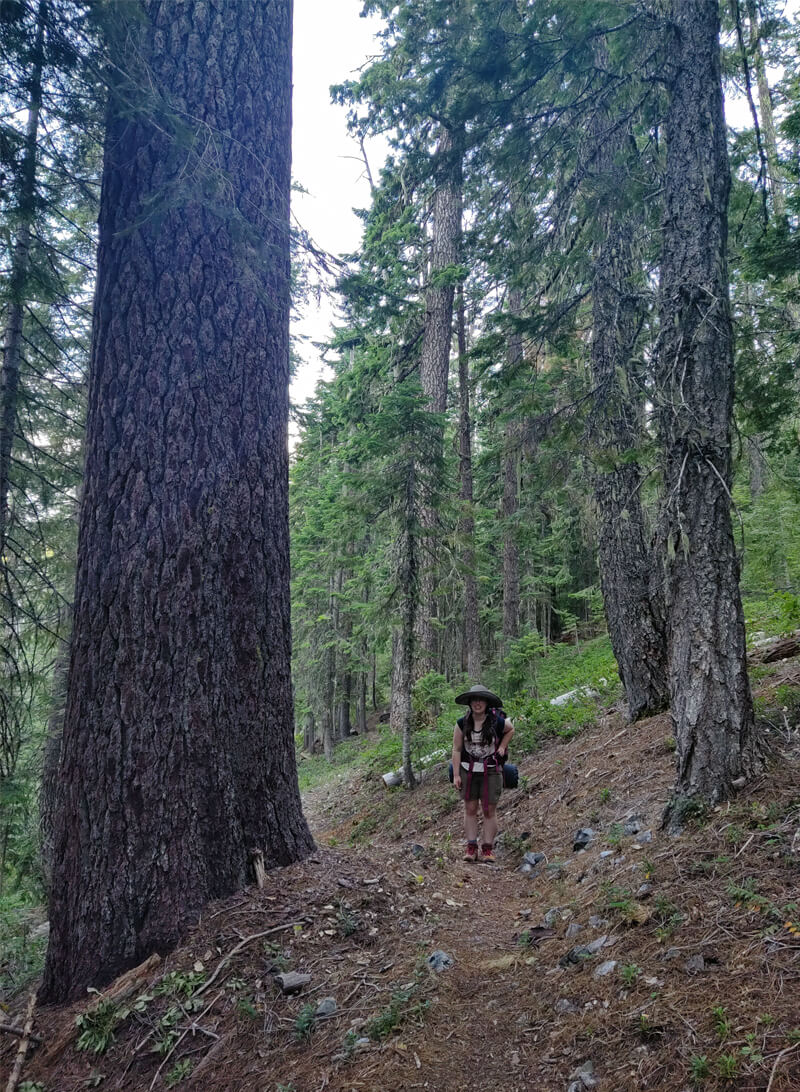
A fully mature Sugar Pine in the Red Buttes Wilderness in Northern California
Packing Plants For ShippingWe pack our plants depending on the needs of each species and size, most plants ship best with the roots packed in moist sawdust or bark fines but some species don't like root disturbance and are shipped in a soil-less growing media.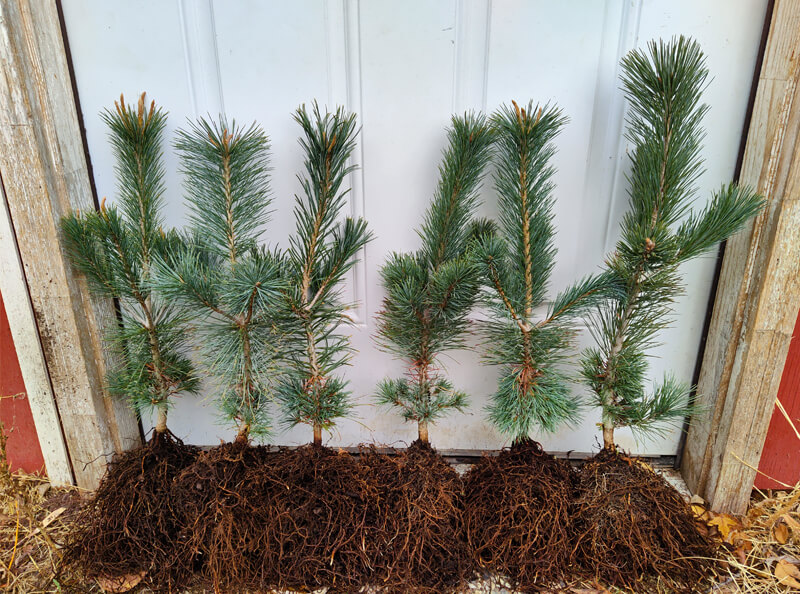 Excess soil is washed from the roots in preparation for shipping (18-24" White Pines) 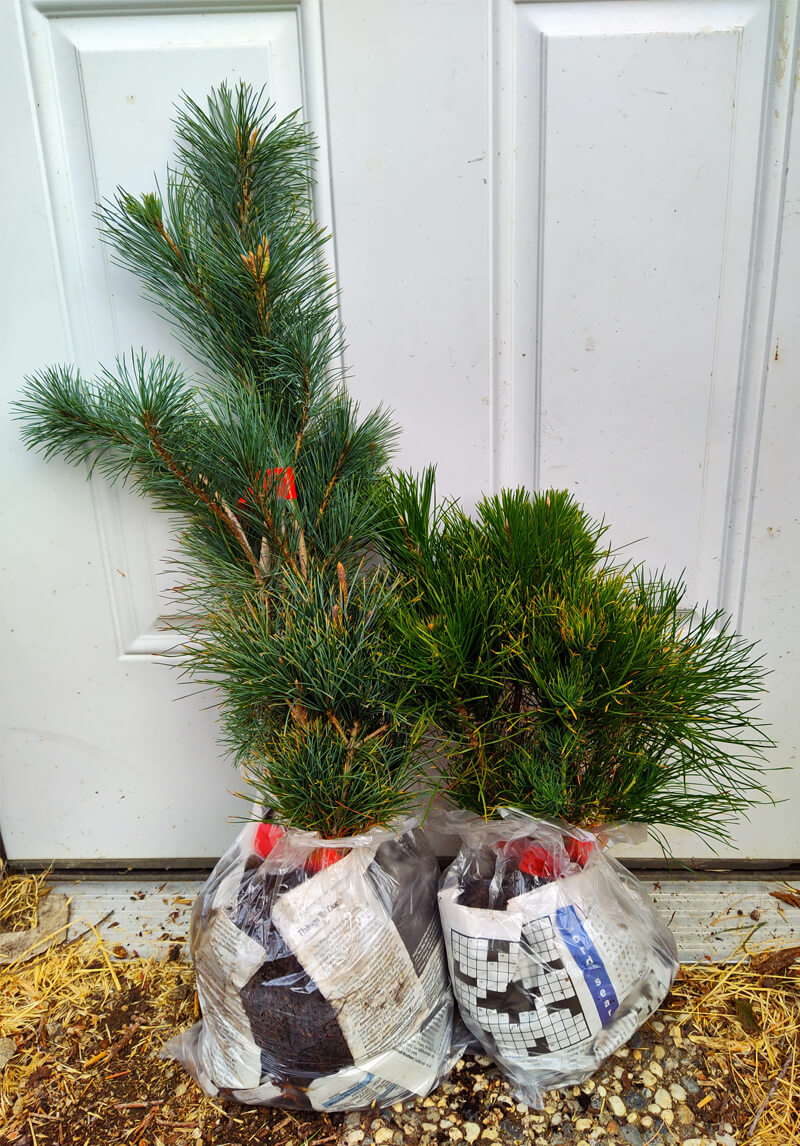 Plants are bundled together to fit in boxes  Bundles of plants are secured in long boxes. Plant Sizes 3 gallon Dawn Redwood 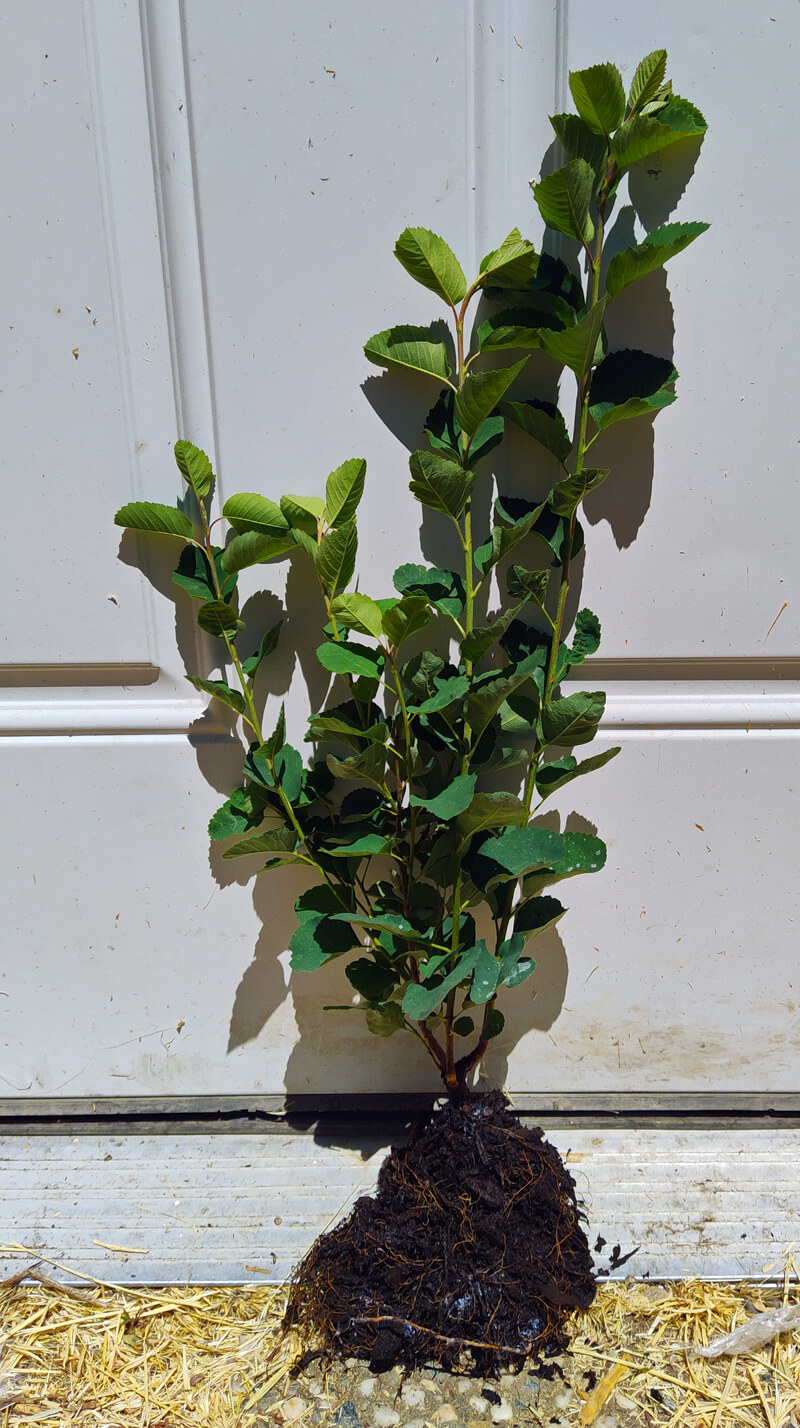 Standard quart shrub  Standard 14-18" multi-stem tree size  Standard deep plug pine tree Bamboo Plants Are Shipped In Their ContainersBamboo roots are not flexible and so plants have to be shipped in their containers. These plants are heavier and are shipped separately from bare root plants. Because they are potted they can handle longer transit times so can ship via UPS Ground instead of USPS Air Mail. Potted plants can also be shipped year-round.We regularly top our 1 gallon bamboo plants at 24-30 inches tall throughout the growing season. This results in dense, bushy foliage while allowing for economical shipping. From this size most running species will grow to 5-6 feet tall in the first spring and clumping species will usually grow to 4-5 feet tall.  1 gallon bamboo plants strapped in and ready to be sealed. Unpacking Bare Root PlantsYou will be sent tracking details as soon as your plants are shipped. Unpack your plants as quickly as possible after they are delivered. We use two types of boxes, side-sealing and top-sealing. For boxes that are taped along the whole length you can cut the tape on either side and remove the plant bundles by cutting the tape holding the bundle to the bottom. For boxes that are sealed on the top and bottom, it is easiet to open the bottom of the box (the shipping label is at the top) and pull the bundle of plants out straight out. Check that the box is empty as there can be a second bundle of plants stuck towards the top. A bundle of trees. What if I am not able to plant right away?You can usually leave the plants in their shipping container unopened for 1-2 days if there were no shipping delays and you have received your plants from late November through February. Plants shipped when it is warmer can't stay in their packages for as long.For longer term storage of plants you can pot them up or plant them in rows close together temporarily and then pull them out later in the spring to be planted again. This keeps the roots moist while allowing for air flow to the tops. The roots should have good contact with the soil to ensure they have access to adequate moisture. |
Size Availability
Out of season.
deep plug seedling - $9.97 each
Our main crop of most plants is available starting in late fall.
Additional batches of plugs and quarts are added throughout the year.
Many of our plants are propagated in limited quantities and can sell out quickly when posted, get on the notification list below so you don't miss out. Add your email to be notified as soon as we have them back in stock:
This does NOT subscribe your email to any mailing lists, our system will only send an inventory notification message.
|
 Red Panda Nursery